If You Still Don’t Know Which Type of Laser Welding Machine Is Right for You, Don’t Worry — You’re Not Alone!
Many manufacturers and industrial professionals face the same challenge before purchasing these machines.
In such cases, getting professional technical consultation for a laser welding machine can help you make the right choice and avoid unnecessary expenses.
Knowing which machine aligns best with your production line requirements, material type, and budget is crucial.
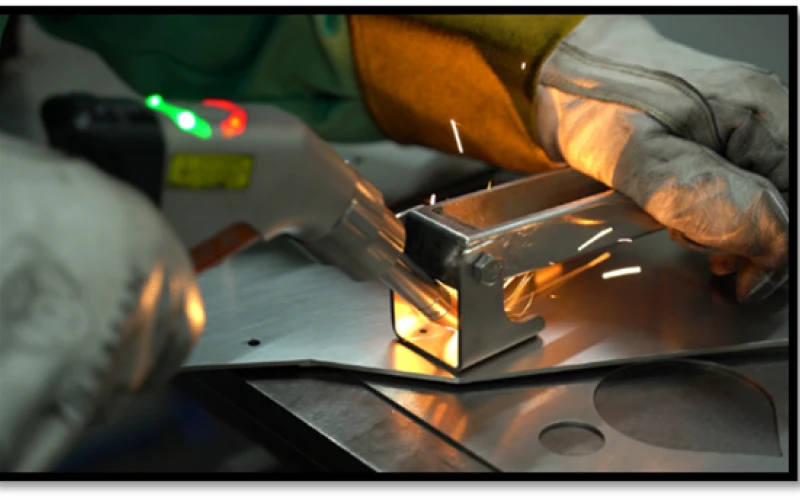
In the video below, you can see an example of a fiber laser welding machine:
In this guide, we focus on key technical aspects, practical features, and criteria for choosing a professional supplier — helping you purchase a laser welding machine that perfectly fits your industrial needs
Why Are Laser Welding Machines the Best Choice?
If you’re still uncertain about which welding method suits your work best, don’t worry!
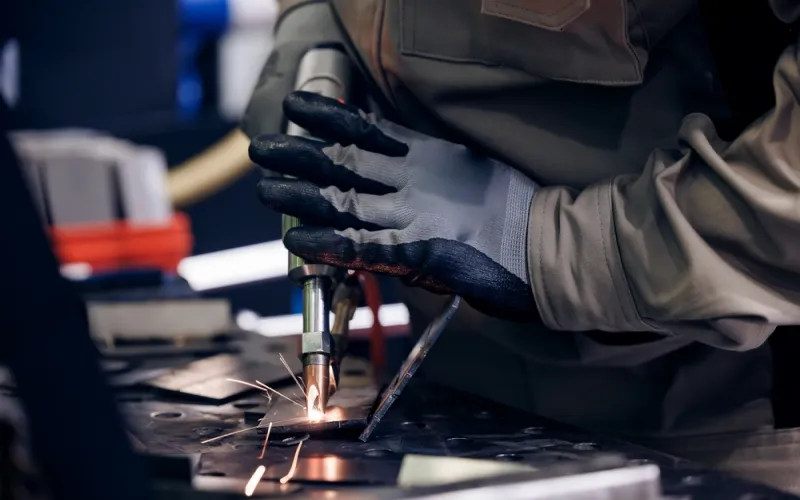
Thanks to their unique properties and numerous advantages, laser welding machines are a reliable and efficient choice for a wide range of industrial applications.
Below are five key reasons why these machines can be your best partner in the welding process:
1️⃣Reason One: A Perfect Combination of Precision, Speed, and Welding Quality

Laser welding can be performed with or without filler metal (welding wire) at a very high speed.
During the laser welding process, the workpiece experiences minimal deformation—or none at all—resulting in welded sheets and parts that are exceptionally precise and clean.
Moreover, laser welding offers high repeatability, meaning you can weld a large number of sheets in a short time, achieving excellent mechanical strength and metallurgical properties in the final product.
2️⃣ Reason Two: The Ability to Weld Challenging Metals
Laser welding allows the assembly of metals with high melting points and thermal conductivity, as well as metals that are traditionally considered “non-weldable” by conventional techniques.
This means you can work with a wider range of materials and achieve reliable joints even in difficult cases
3️⃣ Reason Three: Multiple Welding Capabilities
Laser systems enable various types of laser welding, such as:
- Spot welding
- Conduction welding
- Hybrid welding (for example, a combination of laser and plasma welding)
This flexibility makes laser welding suitable for a wide variety of industrial needs and technical challenges.
4️⃣ Reason Four: Wide Applications Across Different Industries
Laser welding machines—especially fiber laser models—are used in multiple industries due to their exceptional accuracy, high speed, ability to weld different metals, and versatile welding options.
They are widely applied in automotive, aerospace, electronics, and medical equipment manufacturing.
5️⃣ Reason Five: Cost Efficiency in Production and Maintenance
In technical consultations for laser welding machines, one of the most important points emphasized by experts is the long-term reduction of secondary costs.
Because of their high working speed, superior accuracy, low energy consumption, and minimal maintenance requirements, laser welding systems not only improve productivity but also significantly reduce production and maintenance costs over time.
Which Laser Welding Machine Is Right for You?
Each type of laser welding machine has its own unique characteristics and specific applications that should be chosen based on your project requirements and the type of parts you work with.
Below, we compare the main types of laser welding machines and their technical properties.
Wavelength
- Fiber Laser: Short wavelength (1.06 µm), ideal for reflective metals such as aluminum
- CO₂ Laser: Long wavelength (10.6 µm), lower absorption in some metals
- Nd:YAG Laser: Short wavelength (1.06 µm), suitable for a wide range of metals
Energy Efficiency
- Fiber Laser: Very high
- CO₂ Laser: Lower than fiber but higher than Nd:YAG
- Nd:YAG Laser: Lower than both fiber and CO₂
Beam Delivery
- Fiber Laser: Through flexible optical fiber
- CO₂ Laser: Beam reflection using mirrors (limited mobility)
- Nd:YAG Laser: Either optical fiber or mirrors
Maintenance
- Fiber Laser: Low and simple—no mirrors or complex alignment
- CO₂ Laser: Moderate—requires mirror alignment and optical path cleaning
- Nd:YAG Laser: Moderate—requires optical adjustments and alignment
Weld Precision and Quality
- Fiber Laser: Deep, narrow, and strong welds
- CO₂ Laser: Good for non-metal materials
- Nd:YAG Laser: Deep and narrow welds suitable for specialized applications
Speed
- Fiber Laser: Very high—ideal for mass production
- CO₂ Laser: Medium speed
- Nd:YAG Laser: High speed
Equipment Cost
- Fiber Laser: Higher initial cost
- CO₂ Laser: Medium cost
- Nd:YAG Laser: Generally high
Main Applications
- Fiber Laser: Welding industrial metals and automotive parts
- CO₂ Laser: Cutting and welding non-metal materials
- Nd:YAG Laser: Precision metal industries and repairs
1️⃣ Nd:YAG Laser Welding Machine
The Nd:YAG laser is a type of solid-state laser, where the energy is generated inside a YAG (Yttrium Aluminum Garnet) crystal rod.
Although this type of laser has lower energy efficiency compared to other laser technologies, it can still be very useful in specific applications that require precision and focus.
It is commonly used in precision metal industries, tool and die repair, and fine electronic component welding.
2️⃣ CO₂ Laser Welding Machine
The CO₂ laser is a gas-based laser that produces light with a wavelength of 10.64 micrometers.
This machine generates its laser beam by using a mixture of gases such as carbon dioxide (CO₂), helium (He), neon (Ne), argon (Ar), and krypton (Kr).
Compared to the Nd:YAG laser, the CO₂ laser has higher conversion efficiency and can penetrate thicker materials due to its strong performance and fast processing speed.
It is an excellent option for applications that require high-speed welding or cutting of non-metal materials.
3️⃣ Fiber Laser Welding Machine
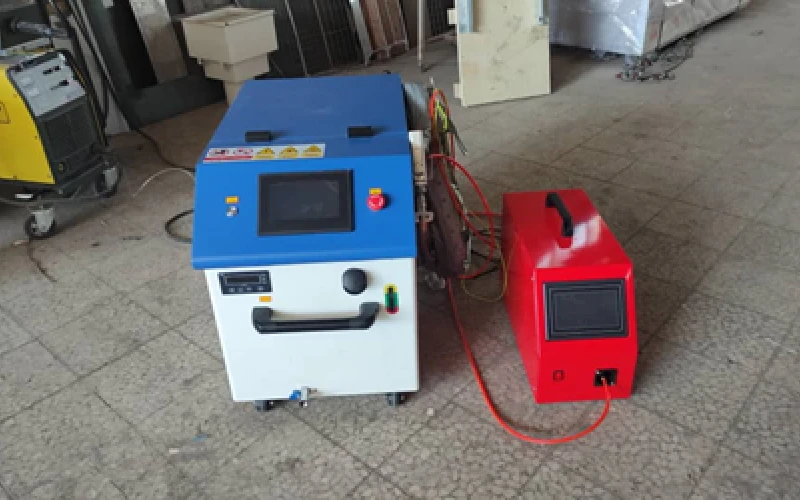
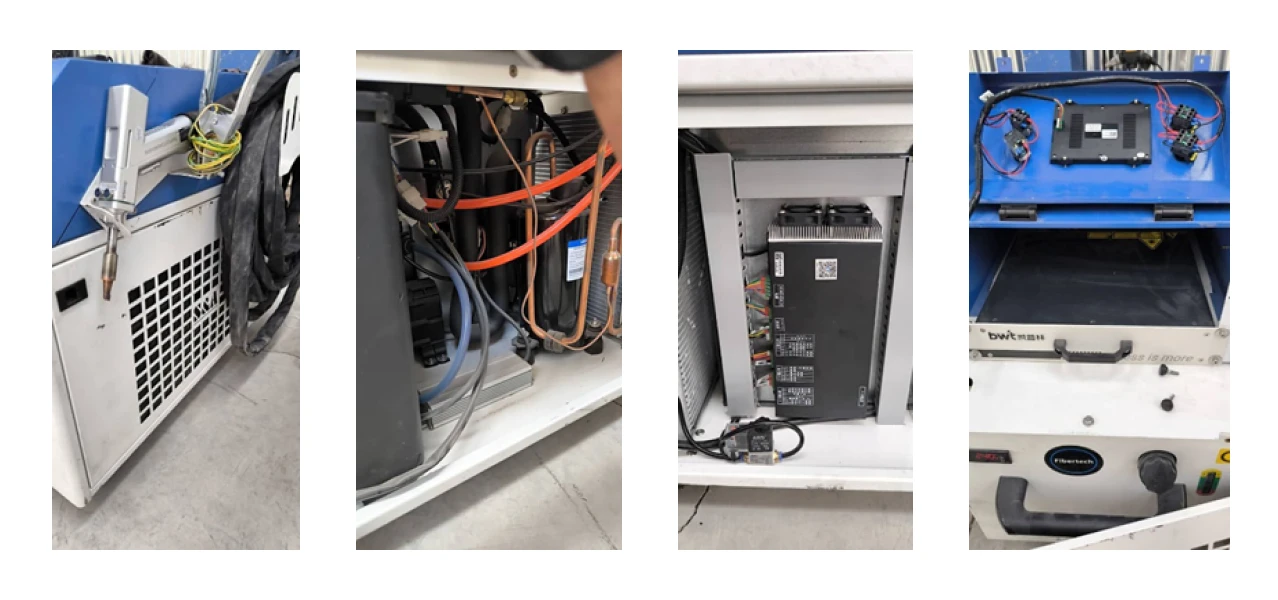
Among the three main types (CO₂, Nd:YAG, and Fiber), the fiber laser welding machine is by far the most popular and widely used.
Here’s why 👇
✳️ Precision Beyond Expectations
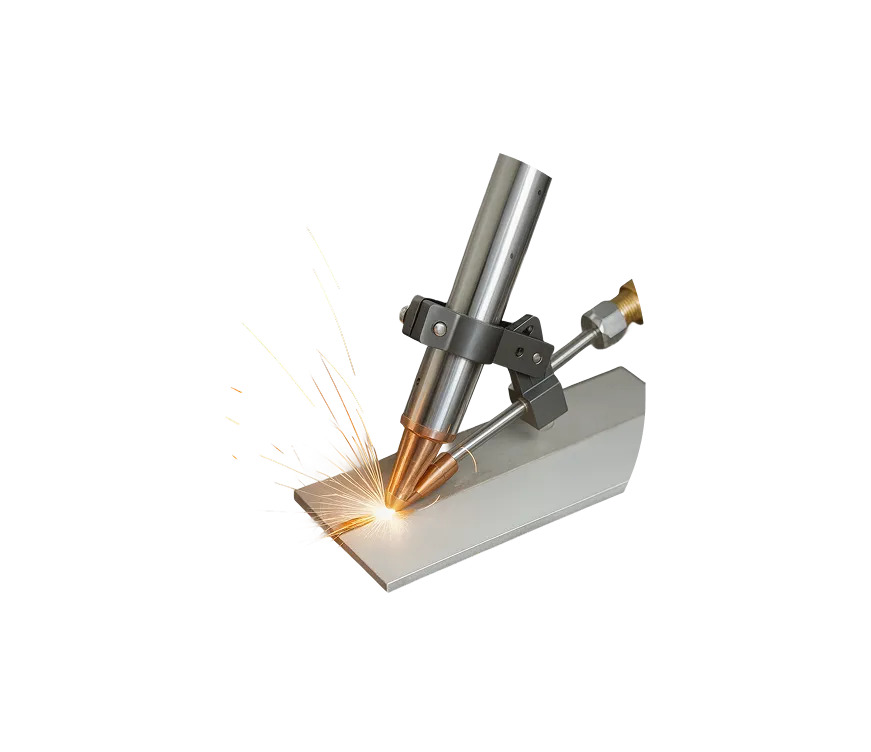
A fiber laser delivers energy in a highly focused and concentrated beam onto a small spot, producing clean, splash-free, and extremely strong welds.
This high energy density allows you to weld very thin and delicate components with ease, resulting in professional and flawless final products.
That’s why fiber laser systems are ideal for industries that require exceptional accuracy and finesse, such as electronics, medical equipment, and automotive manufacturing.
⚡ Impressive Speed for Higher Productivity
Compared to other types of laser welding, fiber laser welding offers significantly faster processing speeds.
This means you can weld a large number of parts in much less time — boosting your production efficiency and throughput.
If your goal is maximum productivity within limited time, a fiber laser welding machine should be your top priority.
💰 Smart Energy Savings with High Efficiency
Although the initial investment in a fiber laser machine may be higher, its operational costs are much lower.
Fiber lasers consume less electricity and have superior energy efficiency, leading to substantial long-term savings and higher return on investment.
If your budget allows, a fiber laser is a smart, future-proof choice that minimizes additional expenses over time.
🔥 Controlled Heat for Superior Workpiece Protection
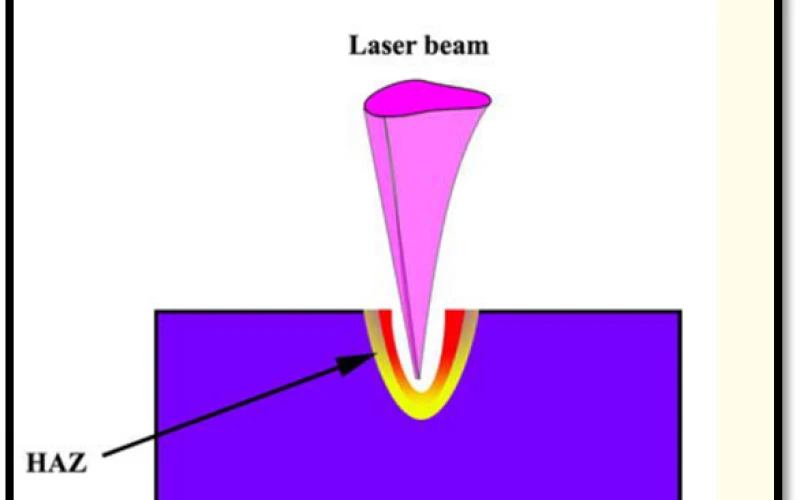
The fiber laser beam heats only a very small and localized area of the workpiece.
This ensures that the surrounding regions remain unaffected, minimizing distortion and structural changes.
As a result, fiber laser welding produces clean, accurate welds without damaging the material — a major advantage in high-precision industries.
🧰 Durability and Minimal Maintenance
Unlike other welding machines with many moving parts, fiber lasers are solid-state systems with very few mechanical components.
This means fewer breakdowns, longer service life, and continuous, interruption-free operation.
Such reliability makes them perfect for high-volume industrial environments where uptime and consistency are critical.
🔩 High Flexibility for Various Metals
Fiber laser systems can weld a wide range of metals, including steel, aluminum, titanium, copper, and even dissimilar metals.
This versatility enables you to take on diverse projects without being limited to specific materials.
💡 Contact-Free Welding — No Friction, No Damage
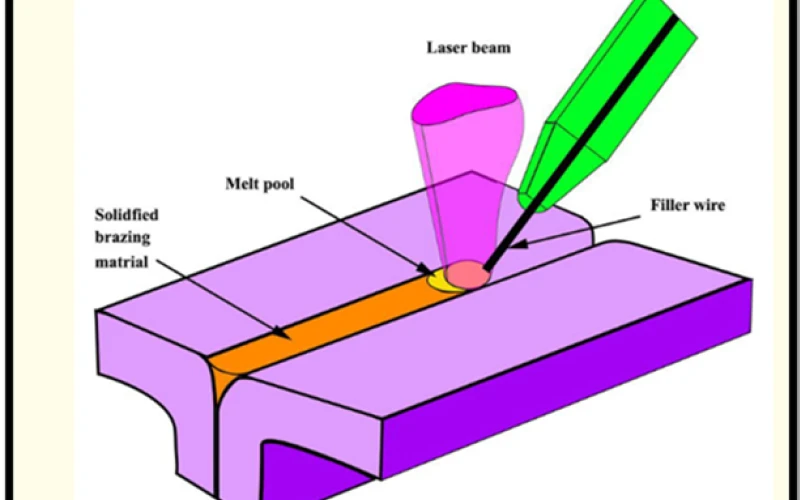
The fiber laser nozzle does not come into contact with the workpiece.
All welding operations are performed solely by the laser beam.
This means there is no mechanical wear, and even complex shapes or hard-to-reach areas can be welded effortlessly.
Therefore, fiber laser welding is ideal for projects where surface appearance and finish quality are of high importance.
🤖 Automated Welding — Easy Integration with Robots and CNC Systems
Fiber laser welding machines can be easily integrated with robotic arms, CNC systems, or other automated production setups.
This makes them the best choice for mass production, repetitive tasks, or applications demanding extreme precision.
At this point, you are now familiar with the different types of laser welding machines and their characteristics.
Considering all these advantages, our recommendation is clear:
✅ Choose a Fiber Laser Welding Machine for optimal performance, durability, and return on investment.
If you’re still uncertain about which model suits your needs best — or if you want detailed technical consultation — our expert team is always ready to assist.
Simply contact us anytime, and we’ll help you select the perfect laser welding machine based on your requirements and production conditions.
But if you’ve already decided that a fiber laser welding machine sounds like the right choice, stay with us for the next section —
where we’ll explain how to choose the most suitable fiber laser welding machine and make a smarter purchase decision.
🧭 How to Choose the Right Fiber Laser Welding Machine
To purchase a high-quality, efficient, and reliable laser welding machine that meets your production needs, you should carefully review the following points:
1. Output Power — The First Step Toward an Efficient Welding System
Laser power (source output) is one of the most important technical specifications of a fiber welding machine.
It directly affects the welding depth, speed, and final product quality.
If your projects involve thin sheets or delicate components, fiber laser systems with 1000 to 1500 watts of power are ideal.
For example, Raycus 1500W laser sources are among the most reliable and efficient options.
However, for thicker metals and heavy-duty applications, you’ll need machines with 3000 to 6000 watts of power, such as:
- Raycus 3000W Laser Source
- Raycus 6000W Laser Source
👉 Before purchasing, always identify the material type and thickness you plan to weld.
2. Welding Speed — The Key to Productivity and Time Management
Welding speed plays a critical role in production efficiency.
The higher the welding speed, the less time it takes to complete a project.
However, speed must never come at the cost of weld quality. The best machines allow you to balance both.
Some advanced fiber welding machines on the market feature adjustable welding speed, enabling precise control based on:
- Workpiece thickness
- Material type
- Desired quality standards
This ensures both optimal productivity and consistent results.
3. Compatibility with Different Metals — A Major Advantage
One of the key technical aspects of selecting a laser welding machine is its ability to work with different metals used in your projects.
Although most fiber laser systems can weld various metals, factors such as material type, thickness, and power level directly influence the results.
✅ Before getting technical consultation, evaluate your project requirements carefully to ensure you buy a system that can weld multiple metals of varying thicknesses effectively.
4. Stable Cooling System for Continuous Performance
Because lasers generate significant heat, your machine should include a high-quality cooling system, such as a laser chiller.
A proper chiller helps maintain stable component temperatures, prevents overheating, and thereby extends the lifespan and reliability of your laser system.
5. Compatibility with Robots and Smart Automation
If you operate large-scale production, choose a fiber laser machine that can integrate easily with robotic arms or automated systems, such as:
- Robotic manipulators
- Motion control tables
This enables automated and consistent welding with minimal human intervention.
6. User-Friendly Design for Higher Productivity
The machine should be easy to operate and control.
Operators should be able to quickly set and adjust welding parameters and run programs without complexity.
A user-oriented design improves both efficiency and operator performance simultaneously.
7. Easy Maintenance and Serviceability
Choose a system that is simple to maintain and doesn’t require complicated procedures for upkeep.
Regular, scheduled maintenance ensures long-term performance and reduces the risk of costly downtime.
8. Vendor Expertise and Authenticity — Guarantee of Quality and Fair Pricing
Select a company that specializes in laser and industrial machinery, rather than a general reseller or marketing intermediary.
The best supplier is one that operates directly and transparently, eliminating middlemen and building a direct connection with customers.
Such companies offer fair prices, maintain technical expertise, and support the local industry by providing affordable, high-quality welding solutions.
At Funoon Laser, we manufacture and supply fiber laser systems directly, with no intermediaries.
Our mission is to deliver professional, reliable, and cost-effective experiences for all industrial clients.
9. Comprehensive Support for Installation, Training, and Spare Parts
A reliable company should not only sell machines but also support customers after the sale.
Professional installation and commissioning must be performed by the manufacturer’s technical team to ensure accuracy and system safety.
Additionally, customers should receive:
- Initial training on operation
- Ongoing technical support
- Fast access to the support team
Funoon Laser ensures all these services are provided.
Moreover, consumable parts such as protective glass, nozzles, and ceramics are included for free for the first year after purchase.
🔟 Seller Commitment and After-Sales Services — The Foundation of a Reliable Purchase
When choosing a fiber laser welding machine, it’s not enough to look only at technical specs.
You must also consider the after-sales service, technical support, and vendor reliability.
Before finalizing your purchase, make sure the seller offers:
✅ Responsive Customer Support
Check whether the supplier’s technical team actively assists customers in case of issues — or if they only advertise support without delivering it.
✅ On-Time Delivery
Ensure that the supplier delivers the machine within the contracted timeline.
✅ Proven Machine Quality
The machine should meet industrial standards and deliver consistent, high-quality output.
✅ Fair and Competitive Pricing
Compare prices with other vendors to ensure that the machine’s cost matches its quality, components, and included services.
11. Supplier Reputation and Industry Experience
Before finalizing your purchase, investigate the supplier’s market reputation and track record.
Find out whether the company only sells equipment or also offers professional after-sales services.
It’s highly recommended to choose suppliers with experience working with reputable factories and workshops.
For a more informed decision:
- Contact their previous clients
- Visit installed machine sites
- Ask about their real experiences with setup, training, and service
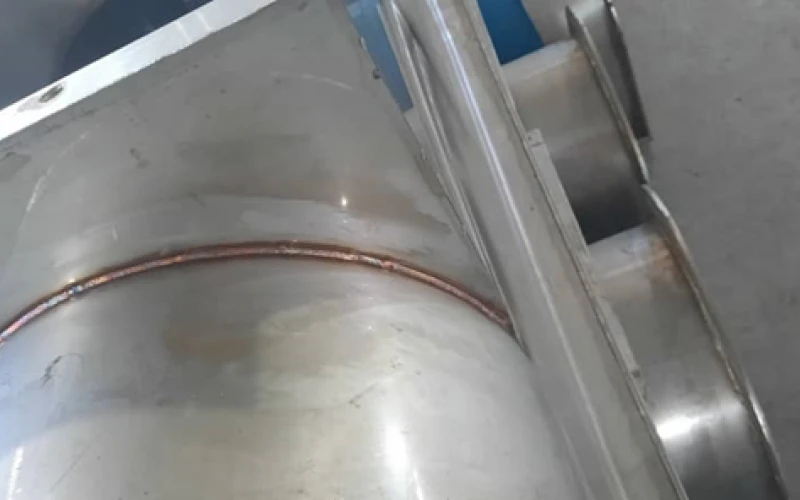
If you still have doubts, ask the supplier to perform a test weld on a real sample piece.
This will demonstrate the machine’s actual performance in your application, allowing you to make a confident, professional purchase decision.
🧩 Conclusion: Why Is a Fiber Laser Welding Machine a Smart Choice?
If you’ve read this guide carefully, one thing is clear:
Among all laser welding technologies, the Fiber Laser Welding Machine is the most versatile, efficient, and practical choice for industrial use.
It offers the perfect balance of precision, speed, quality, and long-term cost savings.
Fiber laser systems can weld a wide variety of metals and perform consistently across different production environments, from small workshops to large-scale manufacturing lines.
At Funoon Laser, we offer 4-in-1 Fiber Laser Welding Machines with the following advantages:
- 💰 Competitive pricing
- 💳 Installment payment options
- 🛠️ Comprehensive technical support
If you’re looking for a high-quality, dependable welding system worth investing in, Funoon Laser’s fiber laser machines are your best choice.
For more information or a free technical consultation, feel free to contact our Funoon Laser experts anytime.