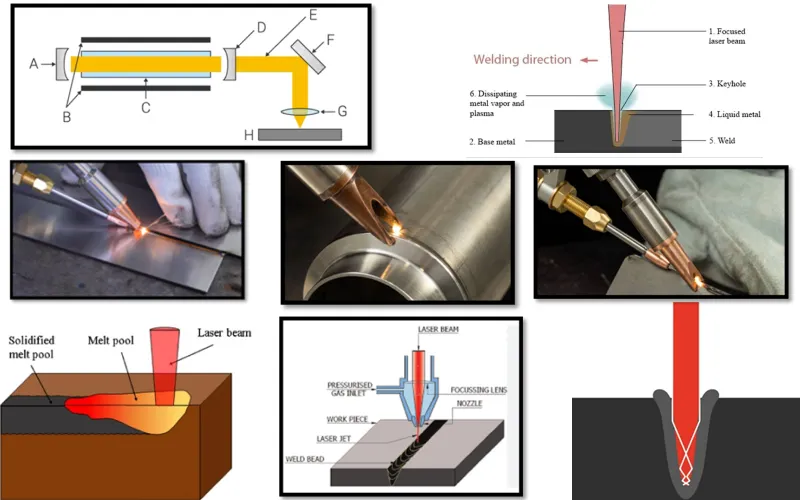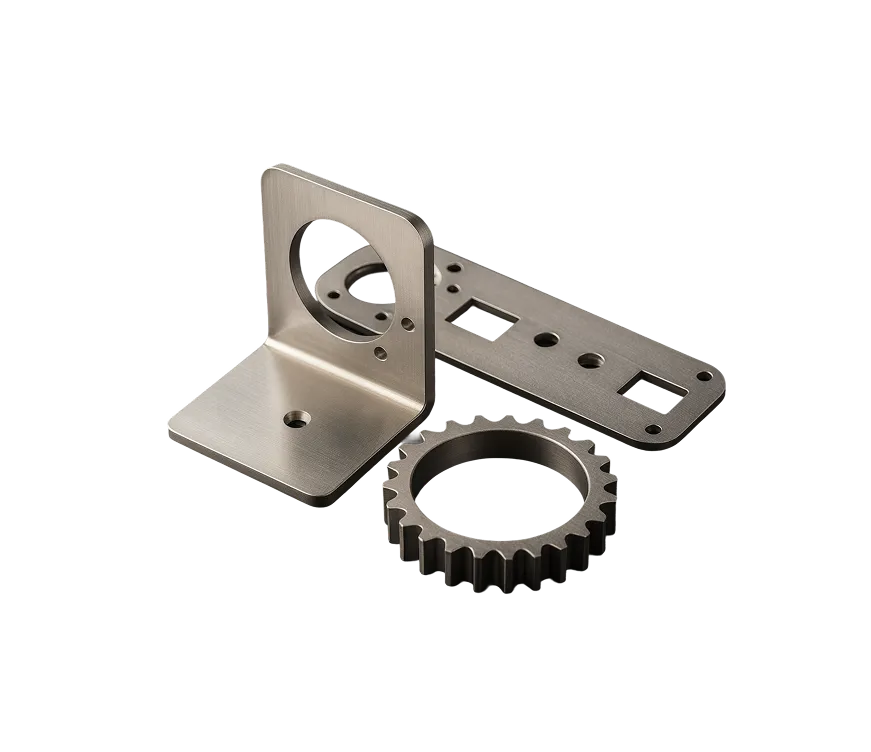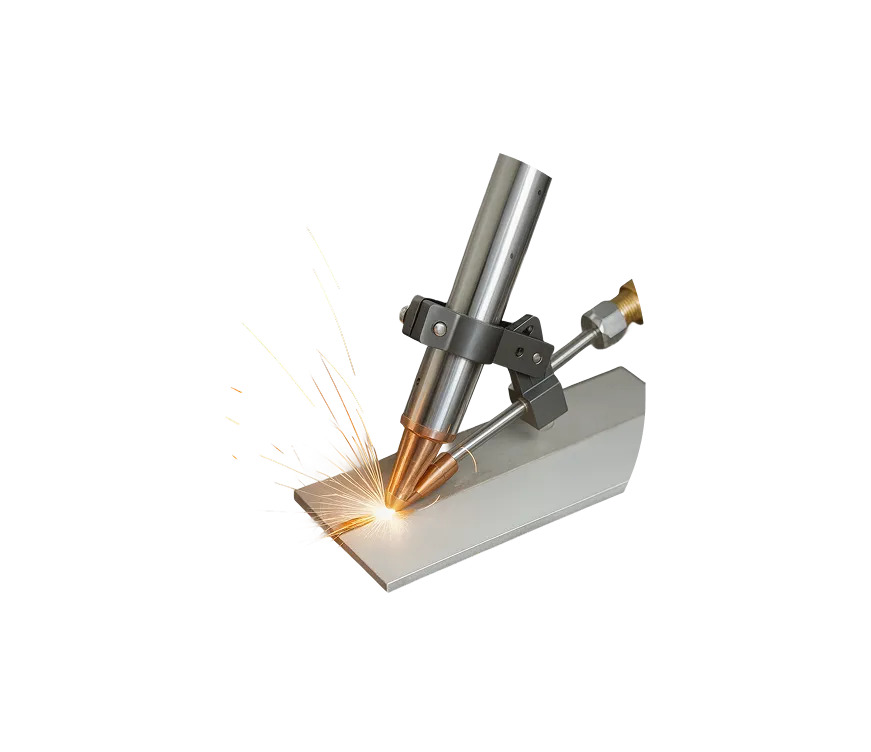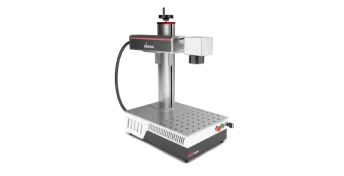

Laser cutting machines are a category of computer numerically controlled (CNC) industrial equipment used for high operational efficiency, precise cutting, engraving, and marking.
These machines are now essential across almost all industries — from cutting paper or cards at home to shipbuilding and heavy industrial engineering!
Different types of laser cutting machines use highly focused laser beams to perform cutting or engraving operations, ensuring maximum precision through CNC-controlled systems.
Each type of laser cutting machine offers its own unique characteristics and applications, making them suitable for various markets and production needs.
In this article, we’ll introduce the four main categories of laser cutting machines:
- Fiber Laser Cutting Machines
- CO₂ Laser Cutting Machines
- Nd:YAG / Nd:YVO Laser Cutting Machines
- Direct Diode Laser Cutting Machines
Stay with us as we explore each of these systems in detail.
Introduction to the Types of Laser Cutting Machines
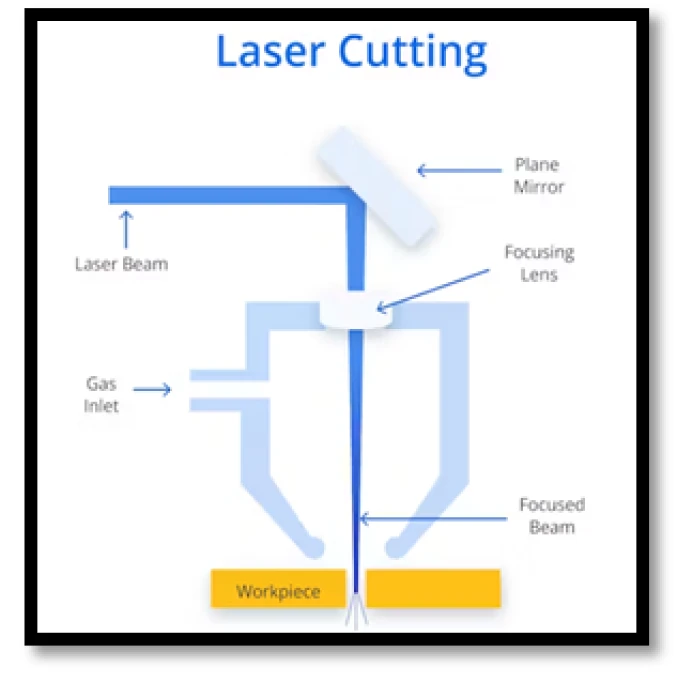
Laser cutting machines use different types of lasers as their energy source, which is why they are often named after the type of laser they use.
The lasers integrated into these machines vary in power output, ranging from a few kilowatts to several megawatts, allowing them to cut or engrave a wide variety of materials.
Different laser wavelengths make each system suitable for specific materials and applications.
Operational factors such as cost, efficiency, and material compatibility determine which laser types are best suited for particular markets or specialized uses.
Of course, no single laser can serve as a universal solution for all cutting or engraving needs.
Below, we’ll explore the four main types of laser cutting machines you should know about.
1️⃣ Fiber Laser Cutting Machines

The primary energy source in fiber laser cutting machines is the fiber laser, which offers numerous advantages over other types of lasers — making it one of the best choices for industrial applications.
Fiber lasers are mainly used for cutting and engraving metal components.
They derive their name from the chemically doped optical fiber that serves as both the gain medium and the light delivery path to the cutting point.
The laser process begins with a low-power seed beam, usually generated by a diode laser, which is injected into the optical fiber.
Inside the fiber, this beam is amplified as it travels through a core doped with rare-earth elements such as ytterbium (Yb) or erbium (Er).
The doping process enables the fiber to act as a gain medium, amplifying the laser light through stimulated emission cascades until a powerful and focused laser beam is produced.
Key Features and Advantages of Fiber Lasers
- Fiber lasers emit light in the near-infrared spectrum, typically around 1.06 micrometers.
This wavelength is highly absorbed by metals, making fiber lasers ideal for cutting and engraving metallic materials, including reflective metals such as aluminum and copper. - One of the most significant advantages of fiber lasers is their exceptional beam quality.
This allows the laser to produce a very fine, concentrated beam, enabling narrower, more precise cutting paths with higher energy density per unit area. - The focused beam also minimizes scattering, allowing for high-precision cuts with smaller kerfs and lower feed rates, resulting in smoother edges.
- Fiber lasers are known for their high cutting speed and outstanding efficiency.
They consume less energy than other types of lasers, making them more cost-effective in the long run. - Fiber laser cutting machines are specifically designed for processing metals such as stainless steel, carbon steel, aluminum, copper, brass, and various alloys.
However, they are not ideal for non-metal materials like wood, acrylic, or plastic, which are better handled by CO₂ lasers. - High-power fiber lasers can cut through thicker metals effectively, expanding their range of industrial applications.
- Fiber lasers feature a simple, durable, and almost solid-state design, which minimizes maintenance needs.
The absence of mirrors and delicate alignment components reduces calibration issues and ensures consistent beam quality. - This robust design also extends the service life of fiber laser cutting machines — with many models capable of operating tens of thousands of hours before requiring major maintenance.
- Due to their operational efficiency, exceptional precision, high throughput, and low maintenance requirements, fiber lasers are considered the optimal choice for most metal cutting, engraving, and surface removal applications.
- These qualities make them highly attractive in industries such as automotive manufacturing, aerospace, electronics, and metal fabrication, where speed and precision are critical to production success.
2️⃣ CO₂ Laser Cutting Machines
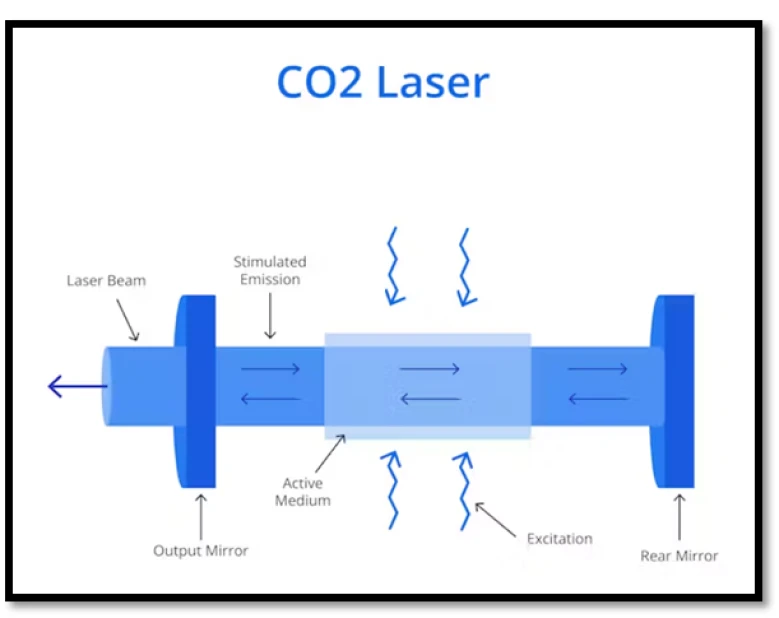
CO₂ lasers, one of the first commercial laser cutting technologies, are still widely used across various industries today.
They are known for their excellent versatility when working with different materials and are especially well-suited for cutting and engraving non-metallic materials with high accuracy and efficiency.
While they can also be used for metal cutting, their absorption spectrum is not ideal for metals; however, modern techniques and assist methods can significantly improve their metal cutting performance.
Main Characteristics of CO₂ Laser Cutting Machines
- CO₂ lasers are gas-based laser systems that use a mixture of carbon dioxide (CO₂), nitrogen (N₂), and helium (He) to generate the laser beam.
- The laser source is typically a xenon flash tube or a similar discharge device that excites the gas mixture to initiate laser emission through a three-step energy transfer process, where only the final step produces photons.
- First, nitrogen molecules absorb energy and reach a higher energy state.
The energy is then transferred to carbon dioxide molecules (CO₂), which release laser photons during collisions with helium atoms (He). - CO₂ lasers emit light at a wavelength of approximately 10.6 micrometers, which lies in the infrared spectrum.
- This wavelength is strongly absorbed by organic materials such as wood, plastics, leather, fabrics, paper, and certain non-metal composites, making CO₂ lasers ideal for these applications.
- As a result, CO₂ lasers deliver clean, smooth, and precise cuts on these materials.
- Compared to fiber lasers, CO₂ systems have lower beam quality, meaning their laser beam is less focused due to the optical complexity and gas-based nature of the system.
- However, advancements in CO₂ laser technology have significantly improved beam quality over time.
- Typically, CO₂ lasers produce larger beam spots and higher divergence, which may reduce cutting precision.
- Despite this, they remain popular due to their versatility, lower initial cost, and efficient energy use per watt of cutting power.
- CO₂ lasers are slower than fiber lasers when cutting thick metals, but they offer higher cutting speed for non-metal materials, making them ideal for complex designs and diverse applications.
- Because they rely on mirrors and optical components, CO₂ lasers require more maintenance than fiber lasers.
The laser tube degrades over time, and optical components must be cleaned and recalibrated regularly to maintain optimal performance. - For more details on the differences between CO₂ and fiber lasers, see our article “Comparison of CO₂ and Fiber Lasers.”
3️⃣ Nd:YAG / Nd:YVO Laser Cutting Machines
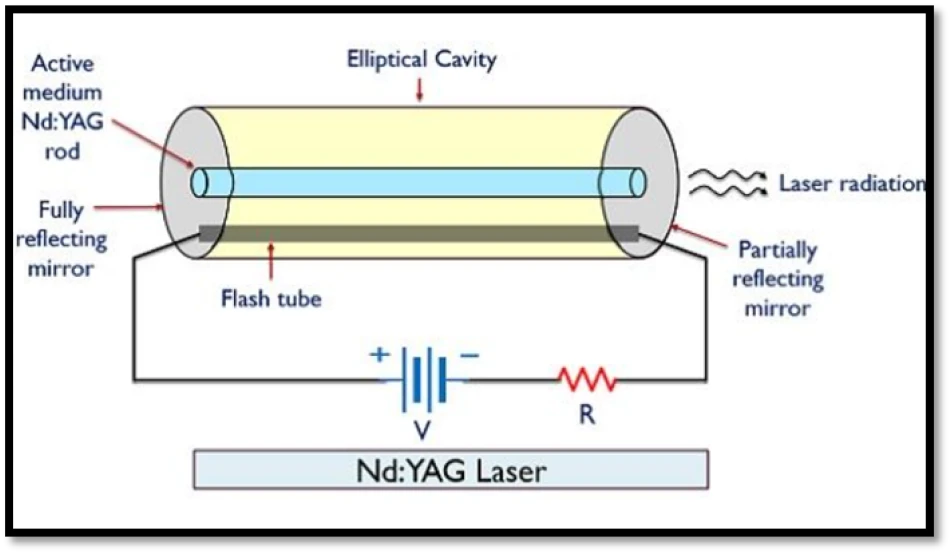
Nd:YAG (Neodymium-doped Yttrium Aluminum Garnet) and Nd:YVO (Neodymium-doped Yttrium Vanadate) lasers are solid-state laser systems with similar principles of operation.
Both emit light in the near-infrared spectrum, differing mainly in the crystal material used as the laser medium.
They are primarily used for metal cutting and marking, as well as for certain non-metal applications
Key Features of Nd:YAG / Nd:YVO Lasers
- Both lasers are neodymium-doped solid-state lasers.
- In Nd:YAG lasers, the active medium is a Yttrium Aluminum Garnet (YAG) crystal doped with neodymium ions, while Nd:YVO lasers use Yttrium Vanadate (YVO₄) crystals doped in the same way.
- When optically pumped (via flash lamps or diode lasers), neodymium ions are excited and release their energy as laser light.
- Nd:YAG lasers emit at 1.064 μm, while Nd:YVO lasers can operate at 1.064 μm or 1.34 μm, depending on the crystal orientation.
- These near-infrared wavelengths are strongly absorbed by metals, making them suitable for metal cutting, engraving, and marking.
- Neodymium lasers provide excellent beam quality, low divergence, and small spot size, enabling high energy density for fine, detailed cutting.
- They are ideal for processing thin sheets and precision metal parts, including stainless steel, carbon steel, aluminum, brass, and copper, even for highly reflective materials.
- They can also cut ceramics, plastics, and some composites, though they are not suited for most non-metallic materials.
- Nd:YAG and Nd:YVO lasers are praised for their durability and low maintenance, often operating for thousands of hours before requiring major service.
4️⃣ Direct Diode Laser Cutting Machines

Diode lasers, also known as semiconductor lasers, generate light using single semiconductor junctions.
This technology has recently gained significant traction in industries such as cutting, welding, and surface treatment.
The direct diode laser is based on semiconductor junctions, typically made of Gallium Arsenide (GaAs).
When a forward electrical current passes through the diode, it emits light directly—without the need for an external light source.
This light is then guided and focused by optical components into a powerful laser beam, which exits through a resonant cavity equipped with a semi-reflective mirror.
Main Characteristics of Direct Diode Lasers
- Available across a wide range of wavelengths, depending on the semiconductor materials, dopants, and resonator design.
- The most common wavelength range for cutting applications is 900–1100 nm (0.9–1.1 μm) in the near-infrared spectrum.
- Alternative diode systems can also operate at blue or green wavelengths.
- Beam quality varies between models, though newer generations show continuous improvements in focus and stability.
- Still, their beam quality generally remains lower than that of fiber or CO₂ lasers.
- Direct diode lasers offer high electrical-to-optical efficiency, converting power into laser light with minimal energy loss, which helps reduce operational costs.
- However, when cutting thicker materials, their speed is typically lower than fiber or CO₂ systems.
- These lasers are suitable for cutting metals, plastics, composites, and certain non-metals, particularly thin metal sheets at high speeds, making them ideal for industries like automotive, electronics, and sheet metal fabrication.
- Structurally, diode laser systems are simpler and more robust than other types, which enhances longevity and minimizes maintenance requirements.
🧩 Conclusion: Which Type of Laser Cutting Machine Is the Best?
Among all types of laser cutting machines, fiber laser systems are considered the best choice for metal cutting.
They offer high speed, superior precision, clean cutting edges, and minimal maintenance costs.
That said, each type of laser has its own area of specialization:
- CO₂ Laser Cutting Machines: Ideal for non-metal materials such as wood, textiles, and plastics.
- Nd:YAG / Nd:YVO Laser Cutting Machines: Best suited for engraving and fine metal cutting, though they are slower and less efficient than fiber lasers.
- Direct Diode Laser Cutting Machines: Offer high energy efficiency and lower operating costs, making them great for thin metal sheets, plastics, and composites, though their beam quality and cutting speed are generally lower than fiber and CO₂ systems.