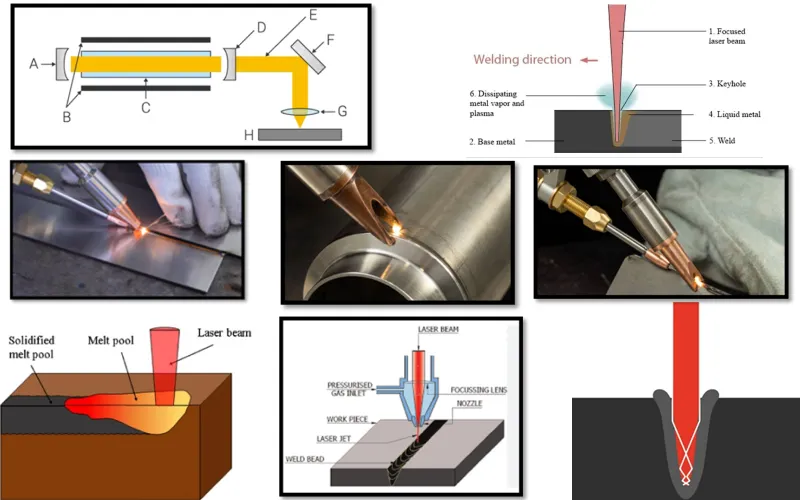
Laser welding machines can be categorized based on the laser source, the type of laser, and the mode of operation.
According to their laser source, they fall into three main categories:
Fiber Lasers, CO₂ Lasers, and Nd:YAG Lasers.
By laser type, they are divided into pulsed and continuous lasers.
And by operation mode, they are classified as manual, semi-automatic, and fully automatic machines.
In this article, we’ll review each of these categories in detail.
Types of Laser Welding Machines Based on Laser Source
Currently, laser welding machines use three main laser sources, each offering unique features and benefits.
The choice of laser source depends on the material to be welded and the specific requirements of the welding process.
Let’s explore each type:
1️⃣ Fiber Laser Welding Machines
These machines use a fiber laser beam as the heat source.
Thanks to their versatility and efficiency, fiber lasers are ideal for producing high-quality spot welds, continuous welds, and other types of precision welding.
They are particularly suitable for small parts in industries such as engineering, medical devices, and electronics.
Because they are non-contact tools, fiber lasers require minimal maintenance and offer high welding speeds.
Fiber laser welding machines are ideal for metal components, offering exceptional precision, reliability, and efficiency.
Their low heat input minimizes damage to materials, and they are significantly more efficient than CO₂ lasers.
Fiber laser welders operate on the same principles as fiber laser cutting machines, using advanced components designed to fuse metals instead of relying on traditional MIG or TIG welding methods.
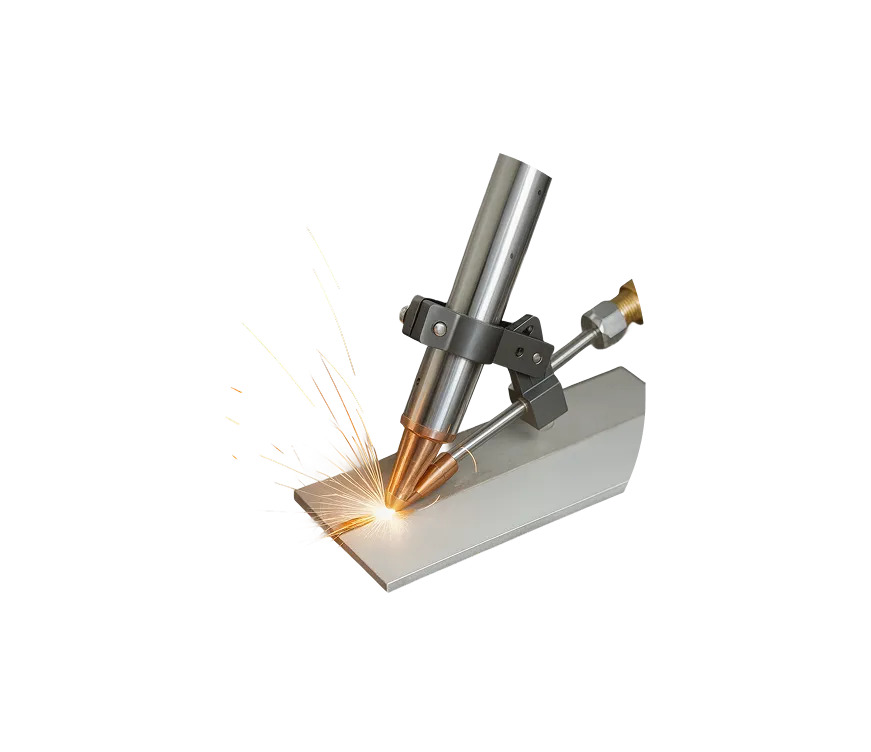
The basic principle of fiber laser welding is converting light into heat energy, which melts the metal surfaces and fuses them together.
Because of the high intensity and focus of the laser beam, the process allows for precise control, minimizing thermal distortion and eliminating spatter, resulting in clean, high-quality welds — unlike conventional welding methods, which often cause splatter.
⚡ High Speed

One of the most remarkable advantages of fiber laser welding is its high speed and outstanding weld quality.
The welds are smooth, clean, and require little to no post-processing.
Compared to traditional welding techniques, fiber laser welding offers much faster processing, dramatically increasing production efficiency — without compromising weld quality.
This makes it the ideal choice for high-volume production or environments where welding speed is critical.
🎯 Precision and Control
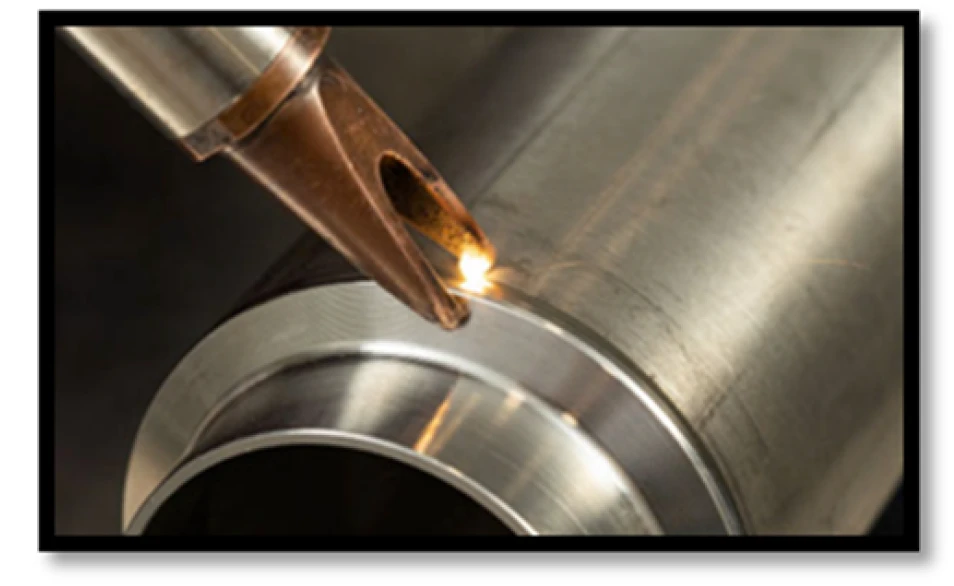
Laser welding provides unmatched precision and control, enabling the exact joining of parts with minimal heat input.
This is especially beneficial for delicate or complex components, where traditional welding could cause deformation or damage.
🧩 Superior Weld Quality

Laser welds are clean, uniform, and highly durable, with minimal porosity or spatter.
This results in stronger and better-looking welds, significantly reducing the need for post-weld finishing or grinding.
🔥 Reduced Heat Input
A key advantage of laser welding is its concentrated heat source, which minimizes the heat-affected zone (HAZ) and reduces thermal distortion.
This is crucial for maintaining material integrity and properties, especially in precision applications.
🔧 Versatility
Laser welding is effective for a wide range of materials, including metals that are challenging to weld using traditional methods.
It can join different material thicknesses and types, making it a flexible solution across many industries.
2️⃣ CO₂ Laser Welding Machines

CO₂ (Carbon Dioxide) Laser Welding is one of the most common types of gas-based laser welding.
It uses a gas mixture that includes CO₂, helium, neon, argon, and krypton to produce the laser beam, with CO₂ being the primary active medium.
Compared to solid-state lasers, CO₂ lasers have higher conversion efficiency and can operate in continuous wave (CW) mode with high power output.
They emit light at wavelengths of 10.6 μm and 9.4 μm, with 10.6 μm being the most commonly used for welding applications.
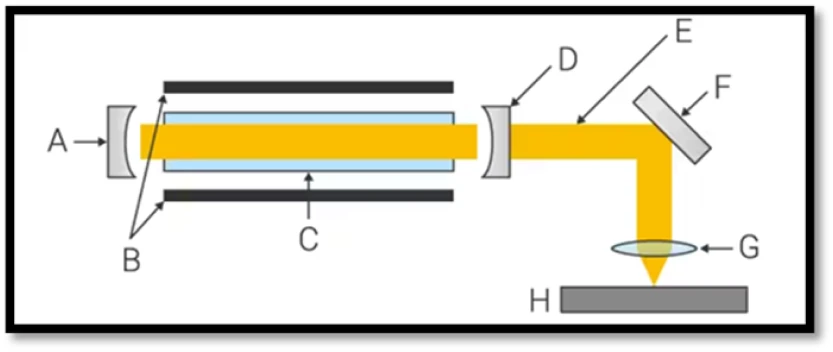
These machines can penetrate thick metal sheets at high speed and are widely used across industries for various material types.
Although they are less efficient than fiber lasers, CO₂ lasers still provide greater efficiency than traditional welding methods.
Key Benefits of CO₂ Laser Welding Machines
- Operate within both TIG and MIG current ranges
- Offer flexibility to choose between different welding currents
- Suitable for adhesive and fusion welding ranges
- Compatible with a wide variety of materials
How CO₂ Laser Welding Works
The CO₂ welding process is somewhat similar to traditional arc welding, though the electrode setup differs.
In conventional arc welding, a metal electrode is heated until it melts and transfers filler material into the weld pool.
In CO₂ laser welding, however, the electrode is metal-coated, and compressed air generates the heat necessary to guide the arc.
Wire feeders, CO₂ tanks, shielding gas, wire connectors, and air pressure regulators are essential parts of the setup.
Operators must also be trained to handle CO₂ systems safely.
Tips for Proper CO₂ Laser Welding
- Learn how to operate and control the machine before starting
- Avoid arc burn, as it can reduce weld quality
- Increase arc voltage gradually for a uniform weld
- Use proper air pressure and power supply to maintain stable performance
3️⃣ Nd:YAG Laser Welding Machines
Nd:YAG lasers (Neodymium-doped Yttrium Aluminum Garnet) are optically pumped using flash lamps or laser diodes.
These are solid-state lasers that emit infrared light at 1064 nm, with additional wavelengths at 946, 1120, 1320, and 1440 nm.
Nd:YAG lasers can operate in both pulsed and continuous modes.
In pulsed mode, they emit controlled bursts of energy, ideal for deep, spot, or seam welds.
They allow precise adjustment of:
- Pulse power (energy intensity)
- Pulse duration (time length of each pulse)
- Pulse shape (energy distribution profile)
Although Nd:YAG lasers are less energy-efficient than CO₂ and fiber lasers, they still excel in applications requiring fine control that other laser types cannot achieve.
For a more detailed comparison of these welding techniques, refer to our article on “Types of Laser Welding” to learn which machine performs best under specific conditions.
Types of Laser Welding Machines Based on Laser Type
Laser welding machines can use two types of lasers: Pulsed and Continuous.
The choice depends on the material thickness and type being welded.
1️⃣ Pulsed Lasers
Pulsed lasers are ideal for thin or delicate materials, such as metal sheets, jewelry, blades, and medical prosthetics.
They deliver energy in short bursts, preventing overheating or deformation.
This makes pulsed lasers perfect for sensitive materials that must be welded without damage.
Nd:YAG laser systems typically use pulsed lasers to ensure precision and avoid melting the surrounding area.
2️⃣ Continuous Lasers
Continuous lasers deliver a constant energy beam, suitable for welding both thin and thick materials.
They are especially effective for thicker and heat-resistant metals, though they can also handle thinner sheets when properly adjusted.
Continuous lasers are most commonly used in fiber and CO₂ laser systems.
Although they have higher initial costs, their operating efficiency and longevity make them more economical for large-scale production.
Ultimately, the choice between pulsed and continuous lasers depends entirely on your specific materials and application needs.
Types of Laser Welding Machines Based on Operation
Laser welding machines can operate in three modes:
Manual, Semi-Automatic, and Fully Automatic.
The right choice depends on your production volume, factory layout, and workflow requirements.
1️⃣ Manual Laser Welding Machines
Manual systems are best for small-scale production.
Here, the operator controls the sequence and positioning of each workpiece.
These machines are more compact than semi-automatic and automatic ones and may include manual or motorized doors.
2️⃣ Semi-Automatic Operation
Semi-automatic laser welding machines are larger and often equipped with rotary tables.
They are ideal for medium to large-scale production and require an operator to manually load and position parts on the fixture.
3️⃣ Fully Automatic Operation
Fully automatic laser welding systems are the largest and most advanced type.
They use robotic systems to automatically position the workpiece under the laser source.
Human intervention is minimal, and automated loading/unloading stations help minimize downtime and maximize productivity.
These machines are perfect for high-volume production, though they are also significantly more expensive than manual or semi-automatic models.
🧩 Conclusion: Which Type of Laser Welding Machine Is Best?
Each type of laser welding machine has its own unique characteristics and applications, and all can weld both thick and thin metal sheets.
However, fiber laser welders stand out due to their precision, speed, and efficiency, making them the best choice for most industries.
✅ Although fiber laser machines require a higher initial investment, the cost is offset in the long run through faster production, reduced operating costs, and greater profitability.
By using these machines, you can accelerate your production process and achieve return on investment in a shorter period.
Yes, laser welding machines are excellent.
They have become very popular thanks to their ability to deliver precise, clean, and efficient welds.
Using a laser welding machine allows you to create high-quality joints with minimal heat input, while preventing distortion or deformation.
These machines are ideal for welding complex, delicate parts or components positioned close together.
Yes, laser welding is generally stronger than MIG welding.
Because laser welding uses a highly concentrated heat source and allows deep penetration, it minimizes the heat-affected zone (HAZ) and preserves the integrity of the base material far better than MIG welding.
This results in welds with superior strength and durability, making laser welding the preferred choice for applications that require precision and structural reliability.
Yes, laser welding machines are very easy to use thanks to the precision and control they offer.
With proper setup and basic training, even beginner operators can produce consistent, high-quality welds.
This makes laser welding machines user-friendly and suitable for a wide range of users, from small workshops to large industrial facilities.
Yes, laser welding machines typically use shielding gases such as argon or nitrogen.
These gases protect the weld area from oxidation and airborne contaminants, ensuring a clean and stable welding process.
The type of gas selected can also influence the appearance, strength, and overall integrity of the final weld.